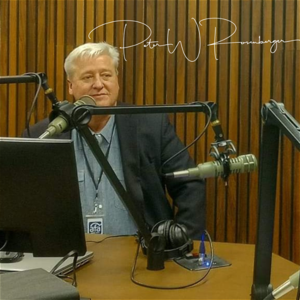
This is the Truth Network. Welcome to Hope for the Caregiver. This is Peter Rosenberg here on American Family Radio. Glad to be with you. Hope for the Caregiver dot com.
Hope for the Caregiver dot com. This is a program that is. For the family caregiver, if you are not a caregiver, you're going to get something out of this program. But I'm not here for you. I'm here for those who are taking care of somebody with some type of chronic impairment, and it is about family caregivers.
And it is hosted by a family caregiver. And I'm bringing you four decades of experience to offer what I've learned, pretty much all of it the hard way. And I'm hoping I can pass on what I've learned so it'll save. As many people as possible, a few bruises along the way. That's my goal because this is a difficult thing to do, but it doesn't have to destroy us or diminish us.
We can grow and become a little calmer, a little healthier, and dare I say it, even more joyful. All while serving as a family caregiver. And healthy caregivers, by the way, do make better caregivers. While I'm on that subject. You ever have you ever seen a picture that grabbed you so much, and you saw the story in the picture?
You know, I'm I don't know much about art. I'd like to. I really would like to learn more about art. I have friends of mine who are artists, and they're very, very, very gifted at this. and And I admire what they do.
And and I've looked at fine art, and I've tried to. Understand it more, and there is a series, by the way. If you ever get a chance to watch it, it's it's really worth your time. On on Rembrandt, for example, and and it's just there is things that you and you can get all these things you can stream them on Prime or whatever, but. There's so much out there that is not worth watching, but when you go back and study some of these these tremendous artists and and the life they led, whether it's through music or or the visual arts and so forth, you it's fascinating.
But anyway, I'm trying to learn, trying to learn. But then sometimes somebody will just put a picture out there that tells a story in ways that are just unforgettable. And I saw one this week. And I wrote about it. It's out of my Substack, but I want to tell you about it.
It was a. It was like it was in. I think it was in kind of like a Middle Eastern country. The setting was because you could see some of the houses way in the background on the hill that looked like they were. It was someplace in Greece or something like that.
But it was out in a very arid, deserty type. Environment, the foreground was, and there was a large rock that was perched on top of another rock, and it was being held there by a small fruit tree. And I don't know what kind of fruit it was. It looked like some kind of, I don't know, kumquat or something. Yeah, real small little orange fruit.
But the tree had grown up under the rock, and then had met the rock, turned and curved back out. But it's almost like there was a groove in the rock, and the force of the growth of the tree was pushing the rock up, so that it was like leaning on the tree. It didn't start off that way, and the the if that rock had fallen, and I was trying to look at this.
Okay, which came first, the rock or the tree? I mean, you know, which how did this how did this get here? It's like the old thing. If you see a turtle on the top of a post, you know, somebody put it there. It it did not just materialize on the top of the post.
So you ask that question. People often use that phrase "turtle on a fence post" to describe somebody who's been put in a position that they did not earn. That that you know that there is no way they could have gotten there on their own, and somebody had to physically or forcefully put them in that position. You know, managers or elected officials, or so forth, or or whatever. You know what I am talking about, anyway.
But so I had that in my mind, and then I am thinking, okay, well, how did this happen? Because the rock was leaning, and. The tree was holding the rock up, but if that rock had just come from, I don't know where the rock came from because there's nothing else around it. It's just this one big rock on top of another big rock, and these are big, big rock. I mean, they're like three, four feet wide.
And it's leaning against this tree that has twisted and curved, and it's pushing this rock up, kind of similar to the way you know grass grows through our concrete driveways and things like that. But this is so much bigger. And then the the astonishing thing was that is that the tree was bearing fruit, and it was all twisted and and misshapen. And it was holding this enormous weight against it, and curved around, and you could almost see a like a little rut in the rock where the tree had actually created some type of groove in there. It's a fascinating picture, and i I studied that, and I looked at it, and you think, well, Peter, you really obviously have a lot of time on your hands.
I don't know about that, but but sometimes things just grab me, and they stay with me, and I just think about it.
So as I studied this thing, it appears the rock was there first. There's nothing else around it, and somehow this rock was on top of another rock. I mean, these are big boulders, and maybe it offered the seedling from the tree the shelter from the heat and the weather, and allowed it to flourish without being you know extinguished in the in the arid. Conditions, maybe that was it. Maybe the wind wasn't able to blow it away, and and so it was flourishing under the shade of that, that it had for portion of the day.
But as the tree grew, maybe it pressed against the rock and formed around it. And I don't know how all this happened, but I looked at it and I thought, okay, the weight existed. The tree met the weight, grew around it. And is still bearing fruit.
Now, to me, that's a picture of a lot of caregivers. We grew into responsibilities we could never imagine. I mean, think about think about what you do every day. And sometimes we wonder, you know, how much longer can we even do this? You know, we we never dreamed there would be that much weight that we would carry, and it feels like it sometimes twists us.
And and yet, we're still bearing fruit.
Now, sometimes you may think about that, and the fruit on this tree wasn't huge, but it was there. And I don't know what even what kind of tree was. Maybe it wasn't supposed to be huge fruit. Maybe it was just supposed to bear fruit of its kind, as as God said back in Genesis. But I don't know.
But sometimes the fruit looks very small, like a made up bet. A meal, or a softer answer when when we are beyond tired. Maybe that's fruit. You know, nobody photographs those things in our life, but the person we care for lives with the difference that that fruit makes, and more importantly, God sees it. And we may overlook the fruit because we're so aware of the weight of what we're carrying.
And and and quite frankly, that is the goal for us as caregivers to meet that weight and keep bearing fruit. And sometimes, hear me out here on this, okay?
Sometimes we may be able to even look back and see that what we carried also offered us a place where we could flourish. That maybe the weight that we rose to meet provided the very place where we could flourish.
Now I don't say that easily, but I have really thought about this all week long, and as I think on this, I think about the things of Scripture, and this is so consistent with Scripture that the thing that we think is the burden ends up becoming the very thing. That God uses to allow us to flourish.
Some of you may feel very twisted and misshapen, and that you are straining under a very heavy load. But I would ask you to consider the picture of that tree. If you want to see it, go out to my Substack Caregiver dot Substack dot com. I'm have it right out there. But let me let me give you this line from Longfellow, who wrote a Psalm of Life.
Listen to this: Still achieving, still pursuing. Learn to labor and to wait. Look at what God is doing and will continue to do. Not just in your circumstances, we all want to see this relieved from us. We all want the rock taken away.
But God is interested in the fruit. He is interested in the fruit, and through the power of the Holy Spirit, we are meeting this wait. We may be misshapen and twisted, so forth. We're still bearing fruit, and that is hope for this character. This is Peter Rosemberg.
We'll be right back. It's hard to count how many times I've brought Gracie home from the hospital.
Sometimes she still needed a level of care that would overwhelm plenty of people, but the medical staff believed I could take care of her. Once I brought her home with oxygen, three drains, a catheter, and yes, two prosthetic legs. That's a tall order for anybody. Trained professionals do this every day, but what about family members who suddenly find themselves responsible for all of it? How did I get here?
How am I supposed to do this? Who's going to help me?
Well, if you listen to this program or read my books, you know what I've learned, often the hard way. But how many caregivers haven't heard? How many are struggling alone? Will you help us reach them? Standing with Hope has two program areas: a prosthetic limb outreach for Gracie's fellow amputees, and a family caregiver outreach for my fellow caregivers.
It's for the wounded and those who care for them. We don't have a fundraising budget. We want every dollar possible going to the work.
So I'm asking you directly: if you find value in this program, please help us put it within reach of another caregiver. Give today at standingwithhope. dot com slash giving. Standingwithhope. dot com slash giving.
Welcome back to Hope for the Caregiver. This is Peter Rosenberg, and this is the program for you as a family caregiver. Glad to be with you. Hope for the Caregiver dot com. Hope for the Caregiver dot com, and on that.
Page. You can find links to everything that we do, and also a way to contact me if you want to. There's a little form you fill out. If you have a question, if you have something you'd like for me to address on the program, whatever, I try to respond back. I even got a letter from a lady this week who said you don't have to call because she knows how sometimes call, and and I'll do that while doing the laundry or cleaning the kitchen or whatever.
So you'll hear all that stuff in the background, but I do try to do the best I can with it. But hope for the caregiver dot com. Hope for the caregiver dot com. You ever had people say things to you that maybe sound okay, but hasn't really been thought through, or may not see the direct application or the implications of what they're saying in that moment? You ever you ever had that?
I've been thinking about this. I put together a list of these things, and I'd like to maybe throw some of these things out to you and see what you think. I've been doing a series on theology, and so I'm going to stay in that vein of understanding what we believe and why we believe it, and why that's important for us as caregivers. You know, to stabilize us when things come at us, and they do—they come at us hard and fast. You know, and and if we don't know what we believe and what's driving us, we're just going to be constantly reacting.
And and I—I don't know about you, but I'm tired of reacting. It's exhausting. I would rather learn to respond instead of react, but it's hard to do that if you don't know what you believe. If you're not if you're not anchored in things that stabilize you. And so, one of those statements that I've heard a lot over the years, we sometimes hear it from from variety of places, is "Follow your heart." Follow your heart.
Yeah, anybody ever tell you that? Surely, not that I mean to call you surely, but I would imagine that we've all heard that, and probably said it. What does your heart tell you? We see that in movies all the time, but we also hear it from pulpits. You know, you also hear from graduation speeches.
You know, those are always rousing moments in great oratory. But you know, follow your heart. Follow your heart. It it does sound encouraging. Trust yourself.
Pursue what matters to you. Do what feels right. Remember Debbie Boone saying that it caused a furor. A lot of people don't remember that, but you light up my life. How can it be wrong when it feels so right?
You know, and and people just really it was it created a big furor back in the seventies when that came out. When you tell somebody to follow their heart, what are you assuming? What are the implications? Have you have you thought about the implications of that? When somebody tells you to follow your heart.
Are you considering where that road leads? That's what I'd like to spend some time with. Do we assume that the heart knows the way? Do we assume that the heart tells the truth? What is our heart?
Is it our desires? That that whatever we desire must be good. Before I hand my heart the keys, I think I'd like to know where it plans to take me. And what are what are the implications of this, especially at three o'clock in the morning? Have you ever noticed that a caregiver's heart can have really strong opinions at three o'clock in the morning?
Look, forty years of this, I know something about loving somebody deeply while also being frightened, frustrated, and quite frankly exhausted, and. Those feelings can all occupy the heart at the same time. You could be grateful your loved one is home. You could be overwhelmed by everything their homecoming requires.
Okay, you could appreciate the the people offering advice, and and then you could also wish they'd stop talking. And and you can feel certain you can't keep going, and then you get up and do the next right thing.
So what does This business of following your heart look like in the life of a caregiver, and what is what does Scripture say about this? I mean, I think that's that's always where we want to start. Is go to what what does Scripture say?
Well, Scripture's got some pretty strong words about this.
Okay, let's go to Jeremiah seventeen nine through ten. The heart is deceitful above all things and desperately sick. Who can understand it? I, the Lord, search the heart and test the mind to give every man according to his ways, according to the fruit of his deeds.
Well, that's pretty grim, wouldn't you say? That's a sobering assessment. My heart is deceitful above all things and desperately sick. It can mislead me. The difficulty with deception is that it can sometimes feel very convincing.
There is no deception like self-deception. I mean, you know, there's a lot of people out there. For example, and let me just use a tangential way here: the the trans movement out there. They're following their heart. They say that a lot.
I've got to become a different gender because that's what my heart leads me to do.
Well, is that the heart? Is that? I mean, is that where we're going with this? Do we want to listen to that heart, or is that mental illness, or what? What is this?
What what's going on here? Is that deception? Is that self deception? Have they been deceived by others? Is that just sin being unfettered?
Is this a mental illness? I mean, you know, think about that. These these people are are going through extreme measures to put on a different gender and call it. Their heart is leading them this way. I I've found that with deception.
I can be wrong with tremendous confidence, and and I can I can probably put together an impressive argument for something I already want to do. I can explain my motives and make me look almost flattering in it. I can even probably find people to agree with me, but sincerity and agreement do not establish truth. I can. Sincerely misunderstand the doctor's instruction, but my sincerity will not make the wrong dosage safe, will it?
Jeremiah, in his next verse, tells us that the Lord searches the heart. God understands motives I may not recognize in myself, or may not want to admit, and that should make me willing to be questioned, even when I am tired, even when I've suffered, even when I've been doing this for forty years.
Now Jesus makes the problem personal in Mark chapter seven, verse twenty one through twenty three, and you see what Jesus says: For from within, out of the heart of man, come evil thoughts, sexual immorality, theft, murder, adultery, coveting, wickedness, deceit, sensuality, envy, slander, pride, foolishness. All of these evil things come from within, and they defile a person. And that's what Jesus said. And there it is in black and white. That sounds rather grim, too.
He he identifies the the human heart as the source of evil thoughts, the deceit, the the pride, envy, and all these other sins. We we caregivers encounter plenty of problems outside ourselves. You know, negligence is real. Indifference is is is real. And family members can have terrible behavior towards a family caregiver.
I get all that, and and the system can exhaust us. Yes, but I bring a heart into the hospital too, and my heart needs the same Lord. I'm asking to help everyone else, and my being mistreated. Does not make every response of mine righteous. My heart is still responsible for what my heart is wanting to do, and I still need to answer to God for how I conduct myself, and my suffering, my challenges, my years and difficulties as a caregiver—they don't get a free pass, and they can be very uncomfortable to acknowledge.
But by doing so. By acknowledging, by questioning, by by examining and asking the Lord to examine, which is a very very dangerous prayer. I don't mean dangerous in a in a bad way, but it it that be careful when you pray that to just be prepared. Search my heart, O God, is not an easy prayer, but challenging myself on this, questioning myself, it can also keep me from making a difficult situation worse. The Proverbs twenty eight warns against trusting our own mind, and commends us to walk in wisdom.
Now we all know this. A lot of us probably know this by heart. Whoever trusts in his own mind is a fool, but he who walks in wisdom will be delivered. There it is, right there. You know, don't.
And the companion scripture is Trust in the Lord. In Proverbs three, Trust in the Lord with all your heart. And lean not on your own understanding; in all your ways acknowledge Him, and He will make straight your paths.
So, you know, both of those scriptures point us to trusting in God wholeheartedly, rather than relying on our own understanding, on our own hearts. That does not excuse us from thinking. By the way, we have to think. We have to gather information. We have to ask questions.
We have to examine options. We have to make decisions. But our understanding needs correction.
Sometimes I need somebody to say, "Hey, Peter, you miss something. Have you considered?" Sometimes the thing I miss is you know how tired I am, or how how frightened, or how I've. You know, determined that I'm going to be the one that can handle everything, and somebody needs to come over and say, "Hey, hey, if you consider something differently, a strong feeling." Can tell me something is happening inside me, but it cannot by itself tell me what I ought to do.
Now, somebody, you know, may be thinking, "Well, wait a minute, wait a minute." Does it Ecclesiastes tell us to follow our heart?
Well, let's go back and read that. Ecclesiastes eleven nine: Rejoice, O young man, in your youth, and let your heart cheer you in the days of your youth. Walk in the ways of your heart and the sight of your eyes, but know that for all these things.
Now, by the way, that sounds really great. That sounds like a graduation speech. That sounds like something you'd hear from a lot of pulpits. You know, walk in the ways. Of your heart and the sight of your eyes, if we stop there, but that's not where Solomon stops.
He said, "But know that for all these things, God will bring you into judgment. There's going to be an account.
Okay, you will not be able to do this willy nilly. I don't know if that's a theological term, willy nilly." Now is he is he is Ecclesiastes talking to believers? Is he talking to people who got a new heart, like in Ezekiel, where you had a heart of stone, now you have a heart of flesh? Is he talking to this? I I can't say that I know one way or the other.
I think the qualification that was right in the sentence: enjoy life, while remembering that you answer to God. And Jeremiah warns that our hearts can deceive us. Ecclesiastes reminds us that our desires are accountable to someone wiser than ourselves, and those things fit together.
So, the next time someone says to you, "Follow your heart," or ask, "What does your heart tell you?" Well, here are a few qualifying questions: Follow my heart to where? What makes me think my heart is telling the truth? Does what I want agree with what God says? What could this decision cost me by following my heart? What could it cost somebody else?
And for us as caregivers, am I acting out of wisdom, or reacting out of fear, guilt, and exhaustion? See, Ecclesiastes gives us room to enjoy life, but it reminds us that we're answering to God. Our feelings deserve attention, but our desires require examination. Before you follow your heart, before I follow my heart. Have we considered the implications?
We'll talk more when we come back. This is Peter Rosenberg. This is Hope for the Caregiver. We'll be right back. Welcome back to Hope for the Caregiver.
I am Peter Rosenberg. Glad to be with you, and we're on American Family Radio, and this is the program for you as a family caregiver. Hope for the Caregiver dot com. Hope for the Caregiver dot com. I've been doing this series for a while.
On theology, more more specifically, what do we believe? Why do we believe it? And and when I started doing this radio program back in 2012, we've been on the air now for over 14 years. It's kind of hard to believe that. And and when I started doing this, I purpose to not spend a lot of time on caregiving tips on the task of caregiving.
Because it varies from so many different people. I mean, think about it. I take care of somebody who is in trauma.
Okay, she's had all these surgeries and all that kind of stuff. But there are a lot of you who are taking care of somebody who doesn't have that kind of thing. They have something else going on. They may have severe mental health issues of depression. They may have Alzheimer's.
They may have. You know, a child with special needs with autism. You may have somebody with that has physical disabilities, but not necessarily anything else going on. I mean, they they may be mobility impaired, paraplegic, or so forth. It's just a different kind of setup.
So everybody's got something different.
So when it comes to the task of caregiving.
Well, you know, it's not one size fits all. There's just so many different scenarios, so many different factors going on, and I, what I started doing was to recognize, okay, what is the the common theme that is going on, and and I remember a lot of people came to me. As I started doing the program and it started getting to be known, and they've been taking care of a loved one for two years, and then they wanted to go write a book and come on the program and talk about their book. And the loved one passed away. She, like one lady I remember, took care of her mother for two years.
She passed away, and she now has a book on how to be a caregiver, how to help caregivers, and so forth. I said, "Well, let me ask you a question. Here's my story. You've heard a little bit of it. I laid it all out." Now, what do you have to offer?
What I'm dealing with. What can you speak to right now? And the only thing that she could land on was, well, take care of yourself. I said, well, okay, thank you. I, I never thought of that.
No, I was, I was kind, but at the same time, she, she even admitted her own, her own words were, I, I really don't know what to say to you. And I thought, well, then let's drill down on what your book and what your message is all about, because it's not really you as a caregiver expert, because you're really not. You really are an expert in what you've gone through in taking care of your mother, and these are the things you've learned. It's very specific, but to build yourself as a caregiver expert, that that's a little ambitious. And I don't know that I'm an expert at anything other than failure.
I'm pretty good at that. But what I have learned over this journey are what the the common things that tear apart a caregiver's heart. And that's why I'm doing this series on things that we believe and why we believe them, so it stabilizes us. We have a responsibility to be able to speak to ourselves. In moments when it gets crazy, we can't always have access to someone else.
Some of you understand that because you've had those meltdowns in the hospital parking lot at two in the morning when there's really not many people you can call.
So what do you do? And and we have to learn to be able to speak to ourselves, to say to our own soul, "Be still, my soul. The Lord is on thy side," as the hymn writer said. But how do we do that if we don't understand what we believe and why we believe it? That's why I'm doing what I'm doing because it always comes down to what's going on in our hearts, what's going on in our headspace, and how do we respond to these things that are coming at us?
It seems like it just rapid fire, relentless concussion grenades going off. What do you do? Where do you where do you land? And so now I've taken some of that stuff we've had on theology, and unpacked it even more to statements that people have made to me over the years, that they're really not thinking through the implications. You know, it's just it's one of those things we say almost in kind of greeting.
You know, how are you doing?
Well, nobody when people ask you how you doing, do they really want to know? Honestly, I mean, have you ever found that to be the case that they really want to know how you're doing? And so I. I'm unpacking these things. I have 25 of them that I have identified.
Now, if you may have some that people have said to you, or that you've heard, or you've even said to yourself or to others, and you're welcome to submit them to me. And let me see if my list and your list are matching up, because I don't want to tip my hand right now. Because I'd I'd like to think I'd like to see if I'm hitting the mark. And and and so, if you want to, you can go out to my website. It's hopeforthecaregiver dot com.
And there's a contact. There's a form you fill out, and maybe you can list more than one. Just say, hey, look, Peter, I heard this this morning. You were talking about things people say. I don't know if this matches your list, but here's mine, kind of thing.
Feel free, okay? And and we'll talk about these things because I want to. Ask that question of myself and of others. What are the implications of what you are saying?
So, when I spent the last block talking about, you know, follow your heart, well, what are the implications of this? Where's where's that? Where's that taking me? Can I trust my heart? And and I've landed on the thing of no, I don't know that I want to follow my heart.
I think what I'd like to do is follow His heart. And I think that's a that's a safer place for me to go where His heart is.
So how do I do that? How do I learn where His heart is?
Well, I go read His Word, and spend time there and see what He came to do—to heal the brokenhearted, to bind up the wounded, the widows and orphans. A broken and contrite heart, the Lord will not what despise. You know the the Lord is near to the brokenhearted and saves the crushed in spirit, and that's Psalm thirty four eighteen.
So I want to take those phrases that people say almost offhand, you know, nonchalantly, and turn it into something that goes deeper, more critical thinking. And I want to do that for myself, and offer that to you all. To say, would this be helpful to you? Think of it as a news interview. And one of the things that makes me frustrating when when friendly newspeople interview candidates they like, they never ask them a follow up question.
How so? What do you What do you mean by that? What are the implications? So you'll hear somebody say, "We need to have Medicare for all." Well. What does that look like, and where would that be funded, and and why do we need to have Medicare for all, and and you don't necessarily have to disagree with the premise, but you want to ask it and unpack it.
Well, can we do the same thing with these things that we spurred out? They're they're almost like slogans. Follow your heart. Well, why, to where. To what end, you know, and and the more we ask questions of ourselves and even others, we grow and we learn, and we go in there and Scripture realize that questions are part of the relationship that we have with God.
God questions us, and we and look at all the Psalms that have questions of God, but it's in those questions that we. We determine and we land on what it is that we believe about God, about ourselves, about life, and how we can withstand, endure, and and persevere. And we talked about that last week—the doctrine of the perseverance of the saints.
So that's why I'm doing what I'm doing, and and I'd love to hear your thoughts. Do you think this is worthwhile? Is this something you'd like for me to continue? And if you don't, well, I still may do it anyway. No, I'm just kidding.
Because I've got this laid out for a while, so I I kind of hope you want me to. Otherwise, I'm going to have to come up with something else to do. But that's okay. If that's what you know, I I want to I want to speak to my fellow caregivers in a way that they can understand. In a way that's meaningful to you, okay?
That's what I do. That's why I do it, because nobody knew how to do it for me. And I look back over the forty years, and even those who loved me dearly didn't know what to say. They didn't know how to apply these things to the reality they saw unfolding in my life. And so, I'll give you a just a.
This is a. Foretaste of what's coming. God is good. Everybody says all the time, God is good all the time. People say that to me.
Now, what are the implications of that statement when I'm looking through the glass at Gracie in the ICU for the umpteenth time, and people come up and say, "Well, God is good all the time." See what I'm saying? And I'm going to talk about that.
Next week and and in the weeks to come, I've got like I said, twenty five of these things, and I'm not necessarily disagreeing with it, but I just want to go deeper because that's where we live as caregivers. We don't swim in the kiddie pool here, do we? We don't, and so we have to have things that are going to sustain us in the deep waters. Speaking of that, I want to pivot just a bit here as we go to the end of the year and. We're looking at end of year giving to Standing with Hope, which is the presenting sponsor of this program.
I mean, that's what we do: Standing with Hope. Gracie and I launched this thing over twenty-something years ago. We have two outreaches: the prosthetic limb outreach. And the caregiver outreach—it's for the wounded and those who care for them. Gracie wanted to put legs on her fellow amputees, and I wanted to talk to my fellow caregivers, and that's what we've been doing.
And with end of the year giving to Stated with Hope, which is a five hundred one c three nonprofit ministry, tax deductible gift. I know a lot of ministries. We've given to a lot of ministries, and they give out little gifts. And some of them are nice.
Some of them are okay.
Some of them are this.
Some of them just kind of look like little trinkets you get at a flea market. And I thought, well, how can I thank people who care about what we're doing and want to get invested in what we're doing and want to help us do more? What what what can I do? What what does that look like? And so I've been taking pictures of where we live for a long time.
And all throughout the year, as the season changed and so forth, and I made what I call the caregiver calendar. And I started this a couple of years ago, and people seem to really, really like it. And I put on, I take the picture. This is again where we live, and and then I put a quote on it from the the writings I do, the books I do, and so forth. And this program, and it's something that caregivers can have throughout the year.
To look at and say, okay, here's here's something to remind me, and and the pictures take themselves. I'd love to tell you I'm a great photographer. I don't know that I am. I just point and click because it's so beautiful, and Montana is is an exceptionally beautiful place. And I see things.
I've got moose and and cattle and horses and deer and all kinds of things that I see all the time around here. And so I I grab pictures that really stir my heart, and and I put on there something to remind me of these things. And the caregiver calendar now is available. We've got I've got all the the proofs and everything done. And you can order this now if you want.
We give it to as a gift, and it's with a donation to Standing with Hope. We're asking for a hundred dollar donation to Standing with Hope. This is we don't have a fundraising budget. We don't have big dinners or golf tournaments or anything like this. We have we we have the show.
We have the Prosthetic Limb Outreach. We do the work.
Okay, that's it. We I don't I don't have the the wherewithal to go out and do a golf tournament for this.
So we're just asking if you find value in what we're doing here. Go out today, statingwithhope. dot com, and you'll see the the ad for the the caregiver calendar. I think you're going to be real proud of this, and and I love the pictures in it. I love the scenery, and we'll talk more about it when we come back.
This is Peter Rosenberg, and this is Hope for the Kicker. We'll be right back. Welcome back to Hope for the Caregiver. This is Peter Rosenberg. Glad to be with you.
Hope for the Caregiver dot com. Hope for the Caregiver dot com. We've been talking about things that people say that I don't know have they really thought through it. Things that we say ourselves—have we really considered the implications of what we're saying? And again, the purpose of all this is not to correct people or anything else.
It's for us to think a little bit deeper. I will tell you this: as caregivers, we react a lot. Every caregiver I've known—I've known a lot of caregivers. I've talked to a lot of caregivers, and the common theme is that there's just reaction because we get stretched so thin, we become brittle.
Now, if I'm in the wrong crowd, if I'm talking to the wrong group of people, let me know. But every caregiver I've talked to has gone through this, and some of us are still there.
So, and and part of that is we're stretched thin because we're trying to grab a hold of things that are beyond our reach. And and I get that. I mean, that's just that's just the gig. I mean, I get it. And so, what do we do?
So okay, that's a problem. But now, what do we do about it, and and where do we? What does that look like? Where do we start? Where do we go?
And I have come to the awareness in my life that you go back to certain fundamentals, and it starts with Christian. What do you believe, and why do you believe it? And then once you answered those two questions. Which are not as easy to answer as you might think. We may pop off and say, "Well, I believe," but but really think about.
And then the third question is, and what are the implications? Have you considered the implications of what you just said? And we have lots of things that we say in our culture that we really don't think about the implications of what we just said. We have lots of things we say in our churches. We just don't think about it.
We just, you know, I said that comes across great on radio, doesn't it?
So, but that's what we do, and we we pop off and say these things. Partly, I think now this is just my opinion, the rest of his observation, but this is my opinion.
So you take it for whatever it's worth. Partly because I think that suffering makes us uncomfortable, and a lot of people when they encounter Chronic suffering that doesn't seem to end—that just goes on and on. It's very uncomfortable for them, and so they want to somehow say something that's going to give them a a solid footing and a place to pivot to get out of the conversation real quick.
Well, you know, all things work together for good. I get that a lot. I've heard that a lot from people. And and I'm going to go through. I've written down 25 of these things, and I'm not saying that some of these aren't true.
Some of them are, some of them aren't.
Some of them need to be unpacked a little bit, and and and they're only half true. They they they like the follow your heart thing, and you go back and look in Ecclesiastes, where Solomon says, "Hey, follow your heart," but just remember you're going to be accountable for this.
Well, now that that's a different message than just follow your heart. What does your heart tell you? Whatever your heart tells you, just remember you're going to be accountable to God for this. That's the second part of the equation that Solomon talks about in Ecclesiastes. But we don't hear that, so maybe that's something we can start adding to this and say, okay, here's what Scripture says.
Can't always trust the heart, but you can trust Him. And remember, whatever you do, if you say, "Well, you know, I'm gonna follow my heart and do this," you're gonna be accountable for it. There are gonna be consequences. There's gonna be some type of something that happens with this.
Okay, well, that that does help. And so that's what I want us to do is start critically thinking a little bit more. And and asking ourselves this way, so that we're not in a constant state of reaction, or at the mercy of other people who just want to roll down the window, drive by, and pronounce these things and yell them out. Just follow your heart, or you know, all things work together for good. We'll see you later.
No, come on, we we you know, and that that's going to happen with people, but we're not going to have to be hooked by that kind of stuff, so that we can stay on message for what we're called to do as caregivers. Fair enough. Is that okay? Is that reasonable? Is that something you would like to explore more?
And if if you would, there are several ways you can reach out to me on this and let me know what you think. Number one is go to hopeforthecaregiver.com. There's a contact thing you can do that. You can go out to Standing with Hope, which is the sponsor of the show. I talked about the Caregiver Calendar last.
Block, and you can go out there and send a message through there. You could subscribe through Caregiver dot Substack at my Substack, and you can send notes directly to me from there, messaging notes. Or you can go out to Facebook and our Hope for the Caregiver Facebook page, our Hope for the Caregiver Facebook group that you could join, and then you post a note and I respond to those as well.
So the the fastest way is. Probably through the Substack because that messages mean I can message right from the phone on that, and it makes it a little easier, particularly if I'm doing the laundry. You know, so I mean that's my life.
Okay, so that let me know what you think. All right, just take a moment to think through it, and maybe you got something that people said to you, you've heard, and it just kind of flies all over you, or just kind of doesn't sit well with you, and we can talk about that too.
Okay. And and and then before I get into the song, I want to remind you again the caregiver calendar. I think you're going to be real proud of this. I think you're going to love it. This is what this is the only thing we do pretty much all year round to help raise funds for Standing with Hope, so we can continue the prosthetic limb outreach, we can grow the caregiver outreach, and here's what we're doing with it: we're putting legs on people, we're telling them about Jesus.
Through this program, I write for numerous different publications. I put out stuff all the time, and I speak and do all these things about it. Podcast everything else. I'm putting out as much as I can to help my fellow caregivers, and when you get involved, you're helping us do more. And my way of thank you is just to give you something that means a lot to me, which are pictures of this place, with things that that stabilized me through the caregiver calendar.
Okay, so that's all out at StandingWithHope dot com. You can go out there today. Let me pivot to our song. I'm gonna do something different for our song because we've been talking about the heart. One of the first songs that I ever did with Gracie was this song that we're getting ready to do here.
And to this day, neither one of us can really get through it without tearing up. And I, when I play for her, I can see it on her when when it hits her. And and and I love to play this song, and so I thought maybe this would be the right song to do for today's program. And to hear this voice of her, she is she sang with me last week. She is getting stronger.
We're working on getting her voice back in shape. As she's standing up straighter, we've got a couple of challenges we're dealing with with her prosthetics and you know adjustments and so forth. But Gracie is stronger than elevator rope, and and we're working on it. But in the meantime, I thought this song really reflects so much of Gracie. That it was not written by her or me, but it really reflects her.
And so I thought, given our conversation today, this would be the right song.
So this is Gracie and me on this song called One Heart. One heart that put up a wall, one life that wouldn't give all. I learned to play the game of hiding. Hiding all my shame, I couldn't even hear you call. One heart.
That wouldn't give up. One life, the death looked upon. I stayed too long the same. Oh yes, it's me I had to blame. Oh for letting.
Make my heart crumble and fall. Take this one heart, dear Lord, and fill it with your love. Take this one life, dear Lord, may it honor you above. By living faithfully in your life, and then you put the pieces in your hands, formed a brand new heart within, and then I felt a stream of cleansing blood flowing through my life again, oh, again. One heart is what I will get, and one life that's ready to live.
See, it's been so long since I felt that I belong. Oh, let this one heart give you all. Take this one heart. One last endeavor, and fill it with your love. Take this one last endeavor and honor your love by living faithfully.
Yes, by living faithfully. Oh, by living faithfully. In your love, oh faithfully in your love, all in your love.
Now you know why I fell head over heels for this woman. That voice, and I love hearing her sing. This is Peter Rosenberg. This is Hope for the Caregiver. Our time is up.
Thank you for spending it with me. HopefortheCaregiver dot com. We'll see you next time.