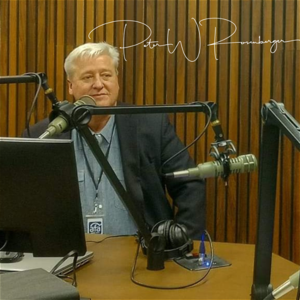
This is the Truth Network. Welcome to Hope for the Caregiver. This is Peter Rosenberg. Glad to be with you. Hope for the Caregiver dot com.
Hope for the Caregiver dot com, and I know. That a great deal of this listening audience probably won't appreciate too much of what I'm about to tell you. Those who will appreciate it tend to be in a different geographic location than most of the people that listen to this program, which is down south for the most part. But last weekend we had snow and quite a bit of it, and I know that Southerners they like it. They like to look at it from a distance.
I've noticed. Pat, producer Pat of this program, she doesn't care for it very much at all. And of course, AFR is located in Mississippi. And when winter weather comes in Mississippi, it's usually bad. And and you know, I grew up in South Carolina, and then all the years in Nashville.
And you know, when when there's snow, what do people do?
Well, they run to the grocery store and they buy. Bread, milk, eggs, and toilet paper. I I don't understand why snow generates a desire for French toast, and I don't know how the bathroom connects to that in such a you know visceral way. But that's a that's a conversation for another time. But that's what they do.
They go bread, milk, and and toilet paper, and and eggs, and and so that's what happens. But out here, it's a little different, and and. We have a lot of dry weather. I mean, as one rancher told me, you know, we're always ten days away from a drought. We didn't have much of a winter last year, as far as Montana goes; it was it was pretty light, and so we were we were at a deficit this year with some some moisture, and we had a pretty ugly fire season.
So when we get snow, it it has a different effect here, and that's what happened at church on Sunday. I am at the piano. And I'm getting ready to play, and usher leads the church in prayer, and he thanked God for the snow in the prayer. And it was a blustery day, you know. I mean, it's it was driving conditions where I had put it in four wheel drive to get to church, and you know, but that's Montana.
I mean, you if you don't know how to deal with that, then maybe you probably need to stay down south. But as I listened to him praying, you know, he was he was given thanks for this. And he was, and I thought, wow! It just stuck with me. You know, when you think about how many verses talk about snow in Scripture, Job thirty-seven six, for to the snow he says, "Fall on the earth." Likewise, to the downpour, his mighty downpour, and those are Elihu's words or Elihu.
I don't know how to say his name as he described God's power over creation, and. You know, we we look at the weather a lot. We we saw the hurricane. The hurricane hit where Gracie grew up, there in Florida. It right smack dab at Destin, Florida.
Her father lives down there. She's got a lot of family down there, and they're all safe. But it was pretty, uh, it was pretty gnarly there for a while, and. But but Gracie loves the snow, and she she really purposed in her life young, to to not live in a place where there was no measurable winter. At Christmas time, for example, you know they were all having in shorts and and going out to the beach and and had the air conditioner on at the house.
She said it just it was awful, you know. And I wanted to live someplace where we have snow and we have winter.
Well, mission accomplished because we've got it. And I I woke her up the other morning and I said, look, I want you to see. And I built her a nice fire in the fireplace and and she was looking at the snow and and I was talking to family members, my sister back in South Carolina, and it was like eighty five. Degrees or so, she said. You got to be kidding me!
So it's it's a little different out here. It's not for the faint of heart, and there are a lot of people that have moved out here because they saw stuff with Montana on television and everything else. And we haven't had a sufficient Montana winter to drive some of these people back to where they came from. I won't mention which state they came from, but it rhymes with California. But no, I'm.
Well, no, I'm not kidding. But they, we, Gracie and I would come out here. Even when we lived in Nashville, we would come out here for winter. Not the whole winter, but we would come out here in the dead of winter and we'd stay for a good bit of time. That was just once the kids were grown and so forth, and I could work from anywhere.
And we would do that, and we enjoyed it. It's very peaceful, very quiet. But there's more to it with that, you know, and Gracie. Has a particular affinity for the snow. She, you know, she knows something about scars.
She's got a lot of them, and what she likes about the snow is that the rough places are still out there beneath the snow, but for a little while, they aren't the first thing that she sees. It covers everything with just this pristine whiteness. And and I think a lot of us as caregivers understand that we we know difficult places in our lives very well. We can recite the medical history. We can sometimes you know more accurately than our loved ones.
Sometimes, and sometimes more accurately than the person holding the chart. We know all the prescriptions. We know all these things that cause pain. We know what sounds from the other room need means that we got to get up. We we become very good at watching for trouble, but sometimes we need help noticing something else.
And that usher's prayer really stuck with me when he said, "You know, Lord, thank you for the snow. Thank you for the snow." Psalm fifty one seven. David says, "Purge me with hyssop, and I shall be clean. Wash me, and I shall be whiter than snow." There are a lot of A lot of references to in Scripture about snow. David's confessing his sins; he needs cleansing, and and he knows he can't provide it for himself.
And and that's a prayer that I need. And and caregiving gives me plenty of opportunities to discover what's in my own heart. Ample sanctification opportunities, I call them. And We we see that God's mercy and His redemption and His healing and His grace are pictured as snow. Often, you know Isaiah one eighteen, though your sins be as scarlet, they shall be as white as snow.
What a what a tremendous picture! And you know the the snow outside our window gives Gracie and me just just this beautiful view. For a while, God's forgiveness reaches so much deeper, though, than that. It doesn't go away. It doesn't melt away.
We can be cleansed and reconciled to God, and that includes us as tired caregivers. Isaiah 55:10, 11. God describes rain and snow watering the earth and making things grow and providing food, and then He compares that work to the effectiveness of His word. He says, "His word shall accomplish that which I purpose." We see snow falling; we don't immediately see everything that moisture will help produce. When we open Scripture, we may still feel tired when we close it.
The circumstances may look much the same, but God's word has not become ineffective just because we're exhausted. And I look at the mountains up there, and they're covered with snow.
Now, we're not going to see the benefit of all that snow. Right away, it's going to take a while. It's going to pack. We have what we call a snowpack up there, and it's going to pack down, and more snowfall is going to come, and more and more and more.
So that by the time next summer gets here with warm weather, it's going to trickle down and irrigate this valley. And right now, it's given a chance for the place to heal. When there is so much drought, there is so many fires and things like that, the place needs to heal, and it is, and it's going to heal. And that's that's what I was that what what all came to mind as I was watching this usher pray, and I was thinking, wow, that was just such a beautiful prayer.
Now a lot of this has gone by today because it's almost sixty. That's picnic weather out here. We wear shorts, but it'll come back. We always get a good October storm usually, and then it. Warms up just a little bit, and then in November it comes, and it'll stay on the ground usually until April, sometimes into May, and.
You know everything. Though the peaks are are beautiful, I'll put some pictures out on my Substack. You can go out and take a look at it and see some of the pictures I put out there. Caregiver dot Substack dot com, and I'll put that out there for you to take a look at. And it and also oh by the way, I'm assembling the Caregiver calendar for next year for people who want to donate to Standing with Hope.
We we send a beautiful calendar that we make from pictures out here that I take, and I took one. Coming out on our driveway just to look at everything, and I say driveway, but it's a gravel road. I mean, you know, everything. We we live ten miles from a paved road, so everything is very country and rural. But but I love the snow, and Gracie particularly loves the snow.
To remind us of the redemptive work of Christ that covers a multitude of sin, that grace of His, and that is hope for this caregiver. I know you may not like winter, but I certainly liked the beautiful snow we had this week. This is Peter Rosenberg. This is Hope for the Caregiver. We'll be right back.
Welcome back to Hope for the Caregiver here on American Family Radio. This is Peter Roseberger. Glad to be with you, Hope for the Caregiver. dot com hope for the caregiver dot com. I want to circle back to our conversation we started several weeks ago about theology, and I know, I know, I know, I know you're thinking that Peter, this is show for caregivers.
We don't talk about theology. Everything is theology. Everything that we do reflects what we believe about life, about God, about this world. Everything. It's always about theology.
And you can say it's not, and you say, well, you know, Peter, I'm just, I'm just wanted to get through the day.
Well, there's a theological question in that too. Who makes the day? Where did the day come from? What's tomorrow? You know, I mean, we could, we could go down this path.
And and remember, I told you, theology used to be called the queen of sciences, and it's handmaiden philosophy. We don't ask philosophical questions much anymore in our culture. Have you noticed that? How did we get here? What is it all about?
Why is this happening? Where does this fit in? All those kinds of things delve into the world of philosophy, and we don't ask those. And one of the questions that I ask myself a lot is Christian, what do you believe? And the follow-up question is always, why do you believe it?
And those questions deserve attention. Especially when you're caring for somebody who can't get through the day without help, what do you believe about God when medication isn't working? When you're waiting for test results, when you've prayed, done everything you know to do, and the situation is still difficult, we carry our beliefs into those moments, and sometimes those moments reveal beliefs. We didn't realize we had. I can tell you, I believe God is sovereign.
Then I can spend the entire night acting as though everything depends upon me and my ability to stay awake. I've had some experience of that. You see how conflicting that is. You see how that can cause any kind of distress in your mind. I explore this for myself, and I want to introduce a doctrine with a name you probably won't hear at the pharmacy.
And it's a doctrine in the church that I personally have found great stability in. That is the doctrine of divine concurrence.
Now, that sounds like something that's going to require registration fee and a weekend at a conference center.
Okay, it's not. Stay with me. There's something here that caregivers would benefit from understanding, and the question behind it is simple: How does God's work relate to ours? If God governs everything, do my decisions matter? If I'm responsible for caring for Gracie, where does God's care fit into that?
And when somebody does something wrong, how can God still be sovereign without becoming responsible for their sin? You see these questions now; these are these are serious questions, and and Christians have been thinking about them carefully for for for centuries. Divine concurrence describes God working in and through His creation, while His creatures. Genuinely, act. God sustains our existence, our abilities, and the world in which we act.
He governs what happens, yet we really make decisions and do things. Our actions do indeed have consequences, and we remain responsible for them.
Now let me go to the Westminster Confession of Faith. It explains that this relationship and its teaching about providence.
Okay, that's when you'll see this in the Westminster Confession of Faith. God's rule establishes the activity of His creatures, and He ordinarily works through means. And by ordinarily, it means that is His custom. Usual way, his customary method, if you will, of working, which is through the people, processes, and resources that he creates. The confession there also consists that God is not the author of sin, and that His sovereignty does not destroy the reality of human willing, or our free will, as we call it, or what we desire to do.
That's a lot to take in.
So let me bring it back here. You pray for your loved ones' needs to be met, and then you fix breakfast. You ask God for provision, and then you go to work. You pray for help, then you call somebody from church and ask whether they can sit with your husband or wife while you go to an appointment. God's provision often comes through ordinary actions.
Someone cooks.
Someone works. And someone's answering the phone. Those actions matter. I've prayed for Gracie before her operations. I've also driven her to the hospital.
I've never considered those activities to be a contradiction theologically. But sometimes we talk, as in our culture, as though trusting God means we should stop doing anything. But conversely, sometimes we work as though God has stopped doing anything. And this doctrine helps us examine both of those assumptions.
Now, where did this come from—the doctrine of divine concurrence?
Well, the underlying questions are there in Scripture. I mean, Christians develop the language as they try to explain faithfully, you know, what what Scripture teaches. In the early church, Augustine wrestled with the related question about God's grace and human choices.
Now, again, that's why we study church history. Because what what what these things have been asked and answered, they've been they've been wrestled with for centuries by really really really smart people. And and writing in the early fifth century, Augustine or Augustine, however you want to say it, Frankenstein, he explained that people genuinely choose and act while depending on God's grace to obey Him. And God's work does not make our obedience unnecessary. That's a double negative, a little bit, but you understand what I mean by that.
Several centuries later, in the in the twelve hundreds, Thomas Aquinas addressed the broader question directly: Does God work in everything that acts? And his answer was yes. God gives creatures their existence and their abilities. Sustains them, and works through their activities. But when think about Elijah with the ravens, he got fed with the ravens.
God worked with the ability of the ravens pick up food and bring it to Elijah. God could have easily just made food appear, but the creatures really acted too. And their activity does not become unnecessary because God is working during the Reformation in the 1500s. John Calvin explained the practical implications of providence. Trusting God does not excuse us from making decisions, or or taking precautions, or or using the the help available to us.
Those things are among the way God cares for us. Later, the Westminster Confession expressed that understanding in its chapter again on providence. These Christians did not agree on every theological detail, and you're not going to find that anywhere with people. But you can see a long history of. Real attention to this question: How do we affirm God's activity without making human activity meaningless?
That was the the wrestling with it. But we caregivers live with that every day. We may never use the word concurrence. I mean, how often have you used that word concurrence? But but we do wonder whether our efforts matter.
We wonder if we've done enough. We wonder how to trust God while making yet another difficult decision.
So let's go to Scripture, Philippians two, twelve and thirteen. Paul instructs believers to pursue obedience seriously. Then he explains the foundation for that obedience. And in verse thirteen, in the ESV, for it is God who works in you both to will and to work for His good pleasure. Paul is speaking about the Christian life.
These believers are called to obey, and God is actively at work within them. Their obedience is real. Their dependence upon God is complete. His activity and ours—they're not competing for the same space. We aren't dividing the job into percentages.
God does fifty, I do fifty. God does ninety-nine, I do one. I mean, that's not how it works. He is always at work in everything we do. I know how to drive to the pharmacy, and I still depend upon God for my next breath.
But I didn't create the hands doing the playing. My abilities are real.
So is my dependence. And I I cling to this doctrine. It steadies me. It doesn't make what I do easier. It just helps my helps my attention get focused higher.
I still have to fill the prescriptions, ask the questions, and get up in the night. But I can become so absorbed in what I'm doing that I lose sight of what God is doing. Divine concurrence—it helps me remember that He's actively at work, even when I cannot see it or understand how. And after 40 years of this, I need that reminder. I know how much attention her care requires.
I also know how quickly that responsibility can consume my attention, and this doctrine helps me lift my eyes. I am still responsible for the work in front of me, and I can trust the God who sustains us both.
Now, there's a difficult part we need to address. What about wrongdoing? What about sin? Does divine concurrence mean that God approves of whatever someone does? No.
God's sovereign purpose does not erase human guilt. Look at Joseph; his brothers sold him into slavery, that was wicked. Joseph suffered because of what they did, and they were responsible for this. Years later, though, if you go to Genesis. Chapter 50.
You'll see Joseph distinguishes their intention from God's intention. They intended evil; God intended good through those same events. The same history involved human wickedness and God's good purpose. Joseph recognized both, and that matters to people who've been hurt. Faith does not require you to pretend that cruelty was kindness or that negligence was acceptable.
You can name wrongdoing. You can seek accountability, and you can take steps to protect someone. Trusting God does not require you to abandon those responsibilities. But Joseph's story also warns us against concluding that human wickedness has defeated God's purposes. Be careful what we do with that.
Joseph could look back. I mean, he could see something of what God had accomplished. We often cannot, and we may not on this on this planet. We may not. We should never walk into someone's suffering and announce that we know exactly why God has allowed it.
How many times has that happened to you? I know it's happened to me and Gracie a lot, and I have spent enough time in hospitals to know how little I understand.
Sometimes the faithful answer is, "I don't know. I don't know why this happened. I don't know what tomorrow will bring. But I can look to Christ to know the character of the God I am trusting, and I can ask Him to help me do what is right today." See, this is how the doctrine of divine concurrence stabilizes me in the midst of all these things, and I wanted to share that with you. We're going to talk more when we come back.
This is Peter Rosenberg. This is Hope for the Caregiver. We'll be right back. Welcome back to Hope for the Caregiver. This is Peter Rosenberg, Hope for the Caregiver dot com.
Hope for the Caregiver dot com. We've been talking about divine concurrence. It's a doctrine in the church. I know it sounds real heady, and it sounds real, you know, haughty, tawdy. That's the official name of it.
I just want you to know that. And I want to tell you why this has been important to me over these last several years as I've been studying and pondering these things, how God works in and through His creation while our actions and responsibilities remain real.
Now, for the break, I talked about Joseph and and how God accomplished a good purpose, His purpose. Through events that Joseph's brothers initiated for evil and carried out for evil, and and Joseph could eventually look back and see something of that purpose. We don't always have that view here, and and and Joseph didn't either. I mean, he didn't have it till much later, but he he toiled away in prison for thirteen years, and and I don't know that he could still see the full plan of any of it. I mean, he he didn't imagine why this was happening and why this was going to affect a nation and and and all the things that are involved.
But and we we can't either in our stuff. I can't explain everything Gracie and I've experienced. I don't see the full picture. I don't know the impact of people's lives who hear this program. You may have heard something I've said because God has the lengthy history of speaking through the jawbone of a well.
Never mind; you get the picture. I mean, you know, whatever I am doing will be flawed, no matter what, how well intended I think I am doing it. It will still be flawed. But what God does is not, and He will do them. At the through the same events that I'm doing them, does that make sense?
And it, you know, again, Joseph's brothers did this, but but God purposed this for good. They purposed it for evil. Same events, and that brings us back to the caregiver's responsibilities. You know, filling a prescription does matter.
So does asking a physician a question.
So does making sure that the bathroom is safe. Those are ordinary things with real consequences, and the the person you love needs breakfast, whether you feel particularly spiritual that morning or not. And sometimes obedience and faithfulness looks like scrambled eggs. I get that. We can approach these tasks at all.
There is so many that we do. Knowing that our work takes place within God's providential care, and that includes receiving help. He works through other people too. He's working through doctors. He's working through pharmacies.
He's working through all the ordinary means of grace in this world, and he's working through all of these things, even people who would do things with ill intent. He is still working his purposes. And I need to remember that that He works through all of these things because I can start to believe that I must personally be the answer to every need. And if God works through means, you know, how many times have I felt like I've appointed myself the means?
Well, you know, every time, and that leaves me exhausted. It also. Overlooks the people that God has placed around us, and sometimes my responsibility is to make the call, and sometimes it is to explain what needs to be doing, and sometimes it's to let other people do it, even if they don't do it exactly the way I would. Accepting that can require humility, and so can admitting that I need it. But there's another place this doctrine helps when the outcome is beyond our control.
And we know how that works as caregivers, and and responsibility can quickly turn into self accusation. You know, if if I'd asked just one more question, if I'd noticed sooner, if I'd chosen a different doctor, oh, if I just turned right, and some decisions honestly need good after action review, but sometimes we put this unreasonable paralysis on ourselves. We're afraid of making a bad mistake, and this was so driven home to me by a wonderful pastor friend of mine named Larry many, many, many years ago. Gracie was wrestling with getting a procedure done, and we didn't know if it was the right thing or not. Right thing.
We we we struggled with this, and we sat there with Larry and we talked for a long time, and he said, "Look, there's, this is not a moral issue, this is not a sin issue." You are gathering data to the best of your abilities, asking professionals to the best of your abilities, and then making the decision. If you choose to go forward with this, you're not in flagrant rebellion against God, kind of thing. Nor, if you choose to do this, you're not showing a lack of faith in God. You you you you go with the the science and the information and the data that you have and you make the decision and trust God with all of it. What the doctrine of divine concurrence equips me to do is it puts my responsibility within the larger reality of God's rule.
I'm responsible for what He has given me to do. I cannot anticipate every complication. I cannot guarantee that this is going to work. Even forty years of caregiving hasn't given me those abilities, but I can seek wise counsel. I can act carefully.
I can correct a mistake, and here's the here's the crux of the whole thing: I can entrust what exceeds my knowledge and my power to God. That is something I have to practice repeatedly, daily, hourly. But now, but now, stay with me on this because here's the deal. God's care for Gracie does not stop when mine reaches its limits. He can provide through someone else.
He continues sustaining his creation, his purposes, his work. While I sleep, I can get some rest, knowing that my wife has a savior. I'm not that savior.
So I go back and ask, what has God actually given me to do today?
Well, what is my job today? What is at my hand to do—to make the appointment, or to make breakfast, or do the laundry, to write another article in my life—that's what I do, or do the radio show, or whatever. You know, what has He given me to do today? Ask for help. Tell the truth.
Apologize for a harsh word. You know. When I can find somebody that can safely hand over responsibility to Gracie for a while to rest, maybe get on a horse. What is at my hand to do today? The doctrine of divine concurrence it's it's a substantial doctrine.
It's got an unfamiliar name, but we we know it when we hear it, and because we see it modeled out, and it speaks directly to the work we we do every day as caregivers. God's actively at work, and our actions do matter, and we depend on Him in every one of those. And that's why this doctrine steadies me. That's why it it it helps me lift my eyes. The circumstances are still here, and they still require my attention, but they don't have to occupy my entire field of vision.
I can lift my Eyes, and the clearest display of all of this is at the cross.
Now, you think about the people involved in this. Judas betrayed Jesus. Do you think Judas is going to be able to stand before the judgment of God and say, "Hey, hey, hey, you know, it was foretold that I would do this. I was, you know, this was this was part of the plan." And Jesus said, "It had been better if that man had never been born." The chief priest sought his death. False witnesses gave testimony against him.
Pilate authorized the execution, and the Roman soldiers they they carried it out.
So there are a lot of people involved in this. Real decisions made by real people. They were really responsible for what they really did. And through those events, God accomplished our redemption.
Now Peter talked about this in Acts chapter two. He said, "Jesus was delivered up according to the definite and plan and for knowledge of God." Then, in that same verse, Peter looks at those guys and said, "This Jesus, who you crucified, they were responsible for doing this through lawless men. God's definite plan. Then they got human guilt, and both are in the same verse, spoken by the same man." Now, if you'll notice, Peter doesn't soften the charge against these men because God was sovereign; He doesn't give them a pass, and He also doesn't diminish God's sovereignty because the people acted wickedly.
Well, you know God was wringing His hands over this. No, because you go back and look at chapter four, and and you get twenty seven and twenty eight. The believers prayed about Herod. Pilate, the Gentiles, and the people of Israel who gathered against Jesus—they acknowledged that these people carried out what God determined beforehand would happen. The cross was God's saving purpose unfolding through the actions for which those people remained accountable.
Judas's betrayal still remained his betrayal. The injustice still remained injustice. God's purpose was holy. Their wicked intentions belonged to them. You see how it is.
It's it's almost mind boggling.
Now I can't explain every part of this. Don't ask me to. But the Scripture gives us reason to affirm both. And at the cross, I see why that matters. You know, the people involved wanted to get rid of Jesus.
Every one of those people that cried out to release Barabbas. But God accomplished the salvation of sinners through the cross. Their actions didn't defeat His purpose, and see that's where this doctrine steadies me. When I look at something painful and cannot understand what God is doing, which is pretty regular, I mean, let's let's be real here. I look to the cross.
I see how seriously God takes sin. I see what our redemption cost. I see the love of a Savior who gave Himself for us, and I see human wickedness could not overthrow God's saving purpose. That doesn't give me an explanation for every hospital room I've set in, but it does give me a reason to trust Him in those rooms. Do you understand that now?
I am real careful about that distinction. I can't tell another caregiver exactly why something happened. I don't know, but I can point him to Christ. I can point him to the cross because the God we're trusting made His character known there.
So when I say I cling to the doctrine of divine concurrence, this is where I am looking at the cross. It doesn't make what I do easier, but it focuses my attention higher, and I can ask God, who has shown me such mercy, to help me do what is right today. And that brings me back to my responsibilities. That brings me back to where I live as a caregiver, knowing that He is sovereign over all of these things. And works His purposes in these things in ways that we cannot wrap our minds around, but we can trust Him.
We can trust Him, and that is hope for this caregiver. This is Peter Rosenberg. By the way, I'm going to put this out on my Substack, and if you want it, you want to go back and listen to it. Feel free, and then I'll put the written version of it at some point. Caregiver.substack.com.
Okay, and you can link to that from the website at homeforthecaregiver.com as well. We'll be right back. Welcome back to Hope for the Caregiver. I am Peter Rosenberg, and I am very glad to be with you. Hope for the Caregiver dot com.
Hope for the Caregiver dot com. We've been discussing today the doctrine of divine concurrence, and that's part of my series I want to do on just helping us as caregivers lock down. What do we believe, and why do we believe this? Why do we even talk about these things? Understanding doctrine stabilizes us, and and and you you've heard the thing with people.
I don't want to talk about doctrine. I just want to just you know just love Jesus. Then you ask the question.
Well, who is Jesus? And now we're having a doctrine conversation. You follow me on that?
So in this one, we're going over the doctrine of divine concurrence. That's a big term. Here's a simple version. God carries out His sovereign purposes through the real choices and actions of His creatures. We make decisions, we do things; our actions have real consequences, and we're responsible for them.
God gives us the ability to act, sustains us, and sovereignly governs everything that happens. For example, Gracie having her car wreck. Forty-three years ago, next month, she was behind the wheel. She got into the car. Do you think it caught God by surprise?
Do you think, well, let me see what I can do with this mess now, or do you think He knew about it and prepared her? And I would suggest to you, by the fact that it was Corey Ten Boom that led Gracey to the Lord when Gracey was a young girl. Because Scripture says, "Remember those who speak the word of the Lord to you, and when appropriate, imitate their faith." Well, Gracie was going to need somebody whose faith was worth imitating, wouldn't you say? And look at look at how God wove those things together. And I can go through story after story on that about how God providentially superintends all of these things.
Proverbs tells us the king's heart is like a stream of water in the Lord's hand. He turns it wherever he wills. Even the king answers to someone. Think about Pharaoh. Scripture says Pharaoh hardened his heart.
It also said God hardened Pharaoh's heart. And R.C. Sproul explained that God withdrew His restraining grace and gave Pharaoh over to the wicked desires already in his heart. Pharaoh did what Pharaoh wanted to do. His rebellion belonged to him, and he remained responsible for it.
But God remains sovereign over the whole event, accomplishing His holy purposes. We saw it with Joseph. We talked about that in the last block or two.
So, and then, and then, of course, we see this most clearly at the cross. Judas betrayed him. Betrayed Jesus. The religious leaders plotted against him. Pilate handed him over.
Soldiers crucified him. They all made real decisions in real time, and they were real responsible for what they really did. Through those actions, God accomplished His plan of redemption, and that matters to, to. Us when we're trying to understand providence, we we can look to the cross and see that even terrible human wickedness cannot defeat God's purposes, and bring that into our life as caregivers. The physician really treats the patient; the medicine really acts on the body.
You really prepare the meal. God sustains his creatures and works through these ordinary means. Our work matters. And we do those things, knowing that everyone involved is under God's sovereign rule, including us. We don't know His hidden purpose behind every delay, every meltdown in the middle of the night, every difficult conversation, every painful thing.
We don't understand this. We don't know. We may never know this side of glory, but His providential care continues throughout all of this. And I need to remember that I I can start acting like every need in Gracie's life requires my personal attention. Apparently, God has said I'm the only person available.
Me, you know, you would think after forty years I would learn this better, but but I, but I haven't. God has other people. He has other hands that help. He has other skills. People that I don't even know still waiting to intersect our life because of God's work, and so all of this comes into play when we live out our day, trusting we're doing the work that is set before us, but we're trusting that God is moving through this.
And this brings me to our hymn, in our series of hymns that every caregiver ought to know, and today's is God moves in mysterious ways.
Now I want to introduce you to the guy that wrote it. And his name was William Cooper. It's spelled C O W W. I say W C O W C O W P E R, but it's pronounced Cooper. And he lived in England from 1731 to 1800.
His father was a minister. His mother died when he was about six, and he was trained as a lawyer and eventually became a poet. And he had a pretty good sense of humor. I think that "variety is the spice of life" comes from one of his poems. That phrase, "variety is the spice of life," but he lived with very serious, recurring depression, and at times his his mental illness and his depression became so overwhelming that he attempted suicide and required residential treatment.
A physician named Doctor Nathaniel Cotton cared for him, and during that time, Cooper came to a deep Christian faith. His illness kept coming back, though he kept struggling with this for the rest of his life, and it's important to keep that in mind as you listen to his words. He he. A woman named Mary Unwin became his devoted friend and caregiver. His pastor and close friend was John Newton.
You know Newton's work; he wrote Amazing Grace. And Newton encouraged Cooper to write hymns. And their work together eventually appeared in a hymnal called Only Hymns O L N E Y. And you probably know some of Cooper's other hymns. There is a fountain filled with blood, drawn from Emmanuel's veins.
Oh, for a closer walk with God! And he wrote that second hymn during Mary's serious illness, and and and so he was, you know, afraid of losing his own caregiver in this thing. He he he understood this from both sides of the equation, and he he knew what it was. Like to need someone and to be needed, and and so he wrote quite a few hymns. This one today, though, we're going to talk about the text.
Ye fearful saints, fresh courage take the clouds ye so much dread are big with mercy and shall break in blessings on your head. You think you think he's preaching to himself at this point? I think he was. I think he knew something about fear. I I think he felt when it was.
Ganging up on him, and he was losing his way on this thing, and and he would write to himself, "I don't know why God allowed him to go through this, but I'm grateful for what God produced through him in this." Judge not the Lord by feeble sense, but trust Him for His grace. Behind a frowning providence, He hides a smiling face.
Some of you. Are looking at a frowning providence right now. I've I've been in that particular area. I spent a lot of time there, and he gives us words to sing from that. Behind a frowning providence, he hides a smiling face.
So let me go to the caregiver keyboard here. Let's go with this fourth verse. Judge not, the Lord. My feeble sense, I trust him for his grace. Remember, he was singing to himself, dealing with mental illness behind a front.
He robs and dents. He hides a smiling face. Behind a frowning providence, he hides a smiling face.
Isn't that a great hymn for us as caregivers? I mean, just to go back and look at again. I play these things a little slower, all right, and I throw in a little. Different chord, probably than they they did with it, but that's only to really spend some time with the text. Judge not the Lord by feeble sense.
How often do we judge God and His motives? We hear this all the time in our society, and sometimes from ourselves. But trust Him for His grace behind a frowning providence. He hides a smiling face. Can we hang on to that this week, as caregivers?
Can you can you just hang on to that? God moves in mysterious way. We don't know, and there are things that are really no kidding, very very uncomfortable in our lives right now as caregivers, and they may be that way for the rest of our lives.
So, what are we going to do about it? Do we want to just stay bitter and stay churned up and despairing, or are we willing to take a tiny step of faith and take him at his word with with the light that you see, the only light that you see? Maybe it's just for one step. That's it. And and as I share these things with you, remember this: I take great comfort the fact that Paul, the apostle Paul, did not preach to the shipwrecked.
Remember on that island when the when the boat wrecked, he didn't preach to the shipwrecked. He preached among the shipwrecked.
Okay, he was one of them. And I think this is what we do as believers and as fellow caregivers. We preach to one another. We preach to ourselves in this.
Okay, my mom is very big on talking about the Lord thy God in the midst of thee is mighty, right here in this. Not waiting on the other side. He's in it with us, and he's speaking to us in this place. And that is hope for this caregiver. HopefortheCaregiver dot com.
Hey, listen! Thank you so much for being a part of this. If you want to get involved, if you want to help us do more, go out to the website HopefortheCaregiver dot com and find out ways that you can sponsor this program and other things that we do. And always remember that healthy caregivers do indeed make better caregivers. We'll see you next time.